Bread
Honey Cast Iron Cornbread
Sweetened with raw honey and baked in a screaming-hot skillet of lard for a crisp, golden crust.
35 min · Easy
Bread · · By Ashley
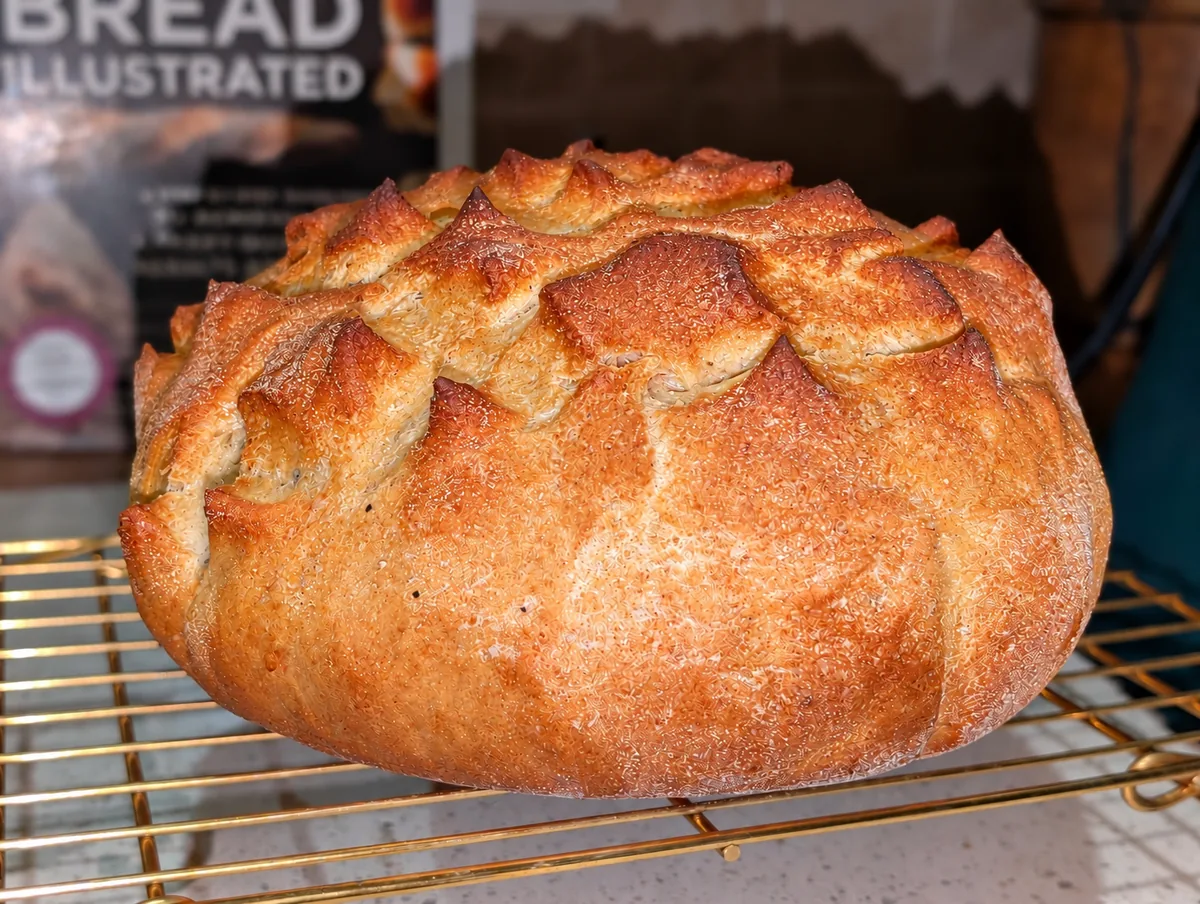
A firm French country boule with Blue Moon in the dough and browned butter on the crust, made for dragging through a creamy stew.
Where the time goes
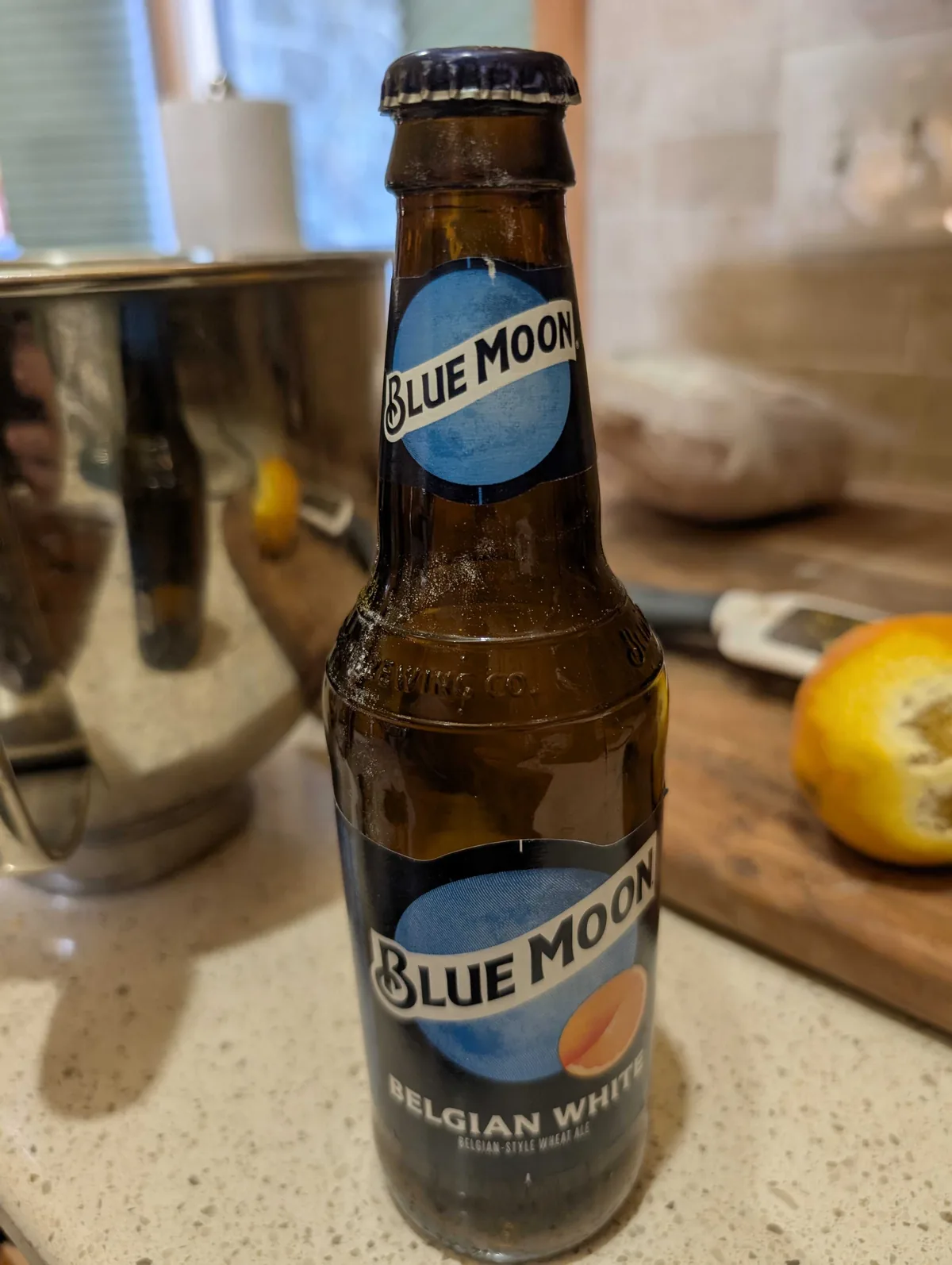
This is a rustic loaf for autumn. Blue Moon Belgian White brings wheat, malt and citrus. Salted browned butter adds a toasted, nutty richness and a savory finish, a little raw honey rounds out the malt without making it taste like dessert, and green cardamom and roasted coriander give it a gentle floral warmth. Orange zest picks up the citrus in the beer.
It is a firm dough, 600 grams of flour to 350 grams of beer, so expect a moderately tight, even crumb with a satisfying chew rather than the big open holes of a wet sourdough. That is the point. The slices are sturdy enough to dip, and the cornmeal base and deep mahogany crust give every bite some crunch.
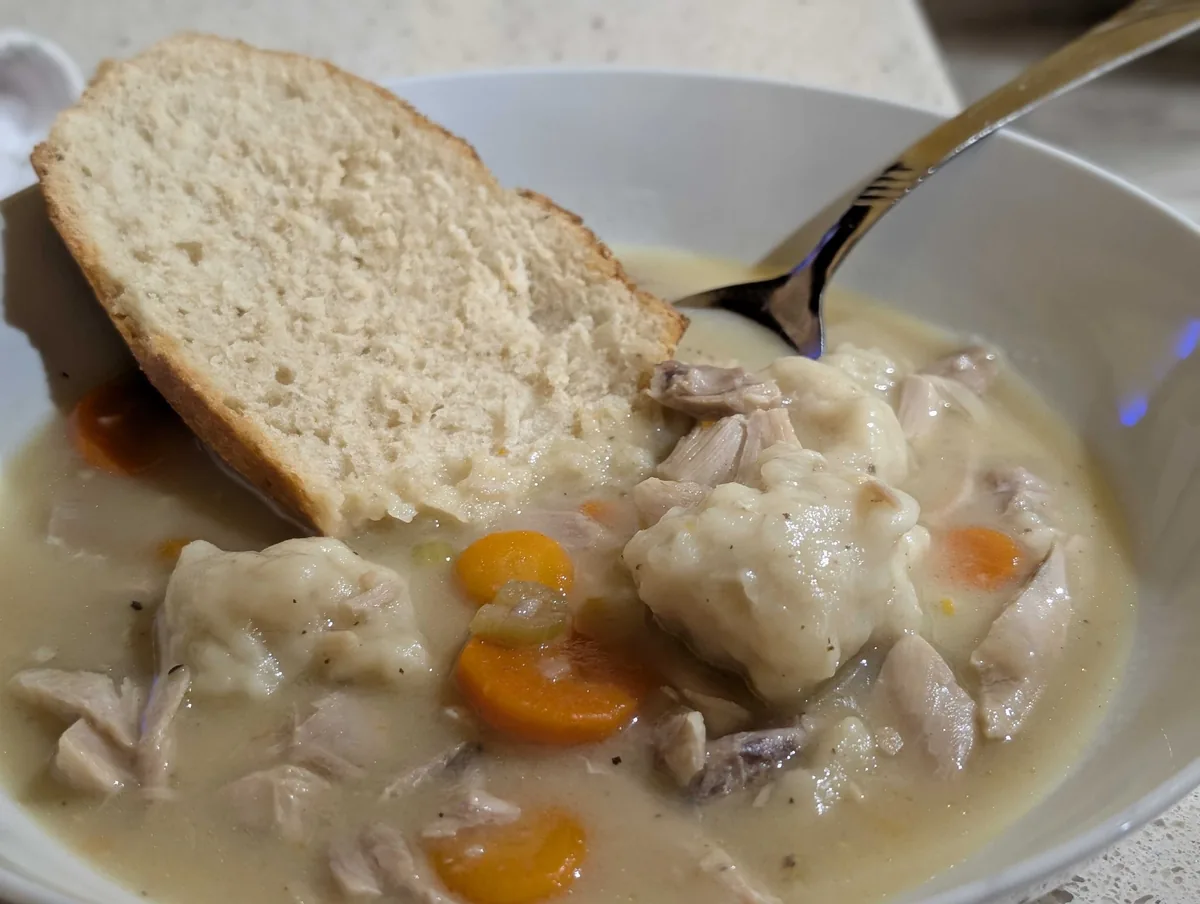
I made it to go with my French Country Chicken & Dumplings. It is also good with butternut squash soup, roast pork or a wedge of aged cheese.
Serves 1 large boule
Tap an ingredient to check it off.
Tap a step number to mark it done.
Brown the butter
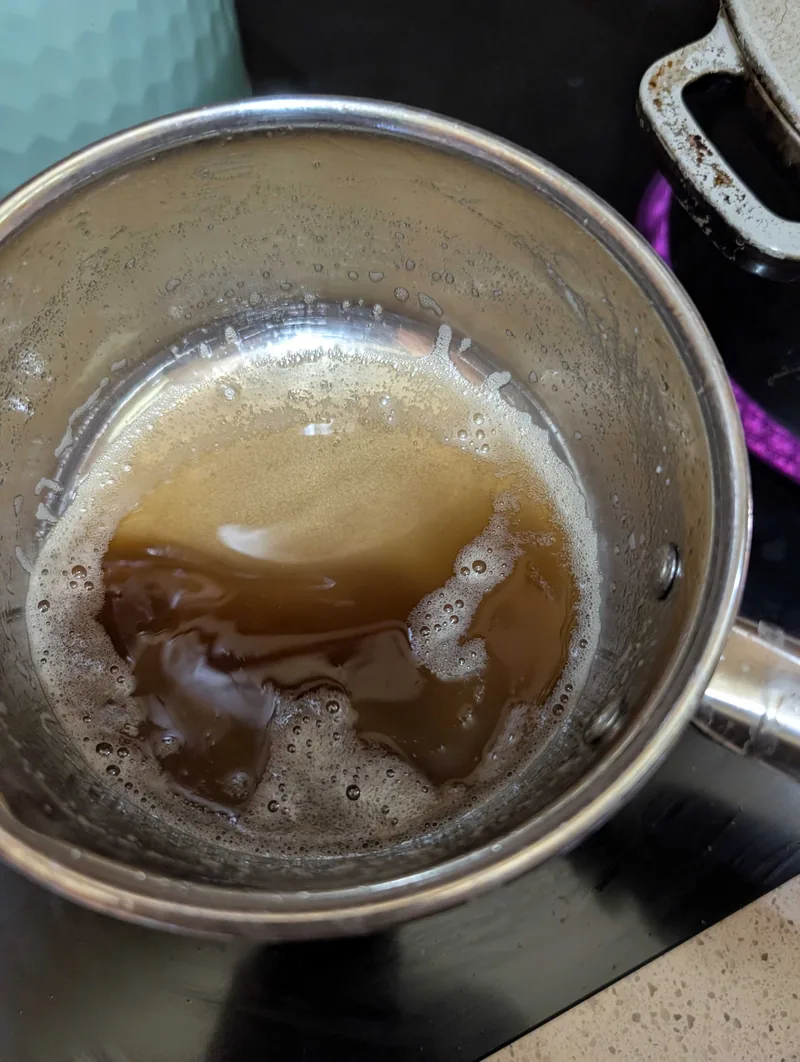
Melt the 3 tablespoons of salted butter in a small, light-colored saucepan over medium-low heat. As it foams, stir constantly, scraping the bottom so the milk solids do not settle and burn. When the foam subsides and the solids turn golden brown and smell nutty, about 4 to 6 minutes, pour it straight into a cool heatproof bowl, solids and all. Weigh out 18 g for the dough and save the rest for a light brushing on top of the loaf. Let it cool until lukewarm.
Do not walk away from the pan. It goes from brown to burnt fast. You will likely have a little left over after brushing, which is no problem. If you are making the chicken and dumplings too, stir it into the pot.
Mix the dough
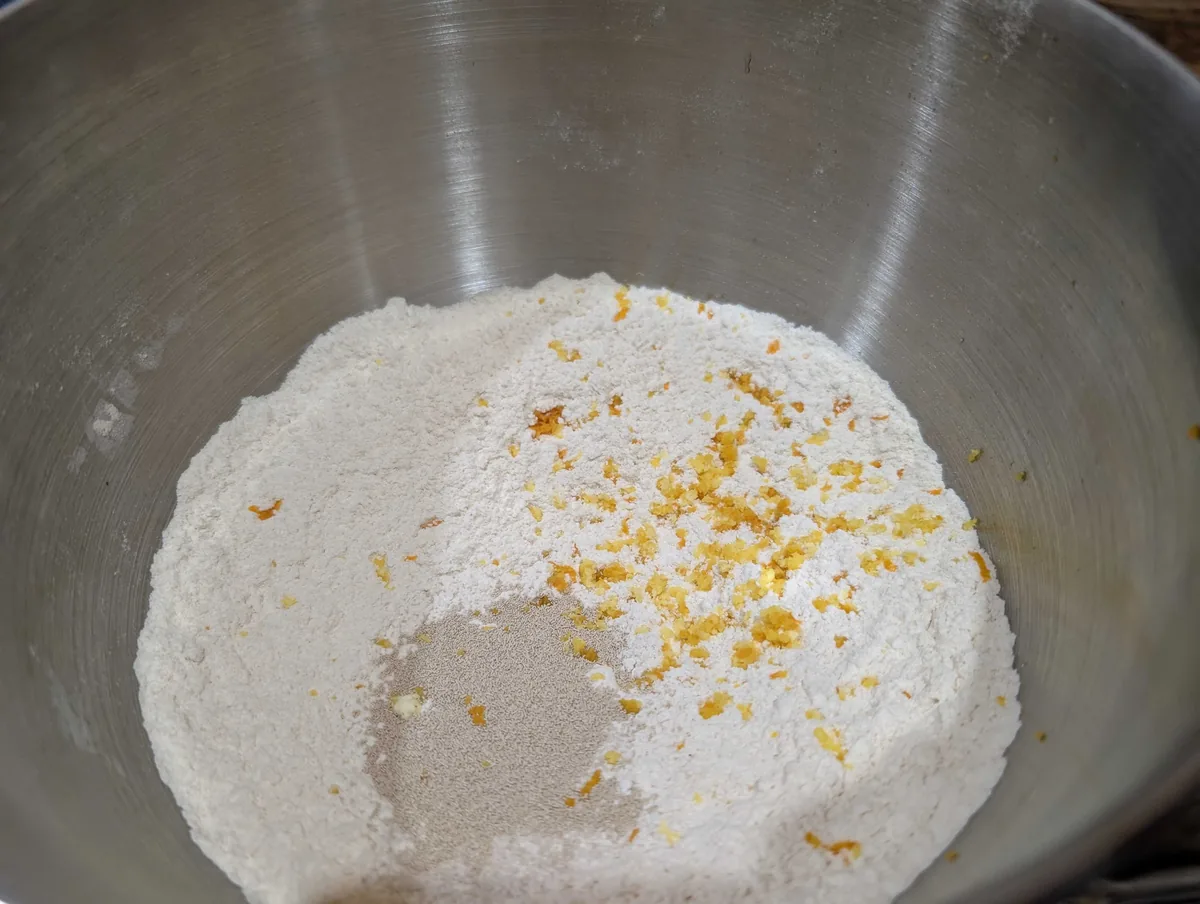
In a large bowl, combine the bread flour, whole-wheat flour and yeast. Add the beer, honey and cooled browned butter and mix until no dry flour remains. Bring it together by squeezing and folding with your hands. Cover and rest for 20 minutes so the flour can hydrate.
This is a firm dough, not a wet, shaggy one. If it stays very stiff or has dry patches after resting, work in water 5 to 10 g at a time.
Knead in the aromatics
Add the salt, orange zest, cardamom, coriander and black pepper. Knead by hand for 6 to 8 minutes, until the dough is cohesive, elastic and smoother. If it resists, let it rest for a minute and keep going.
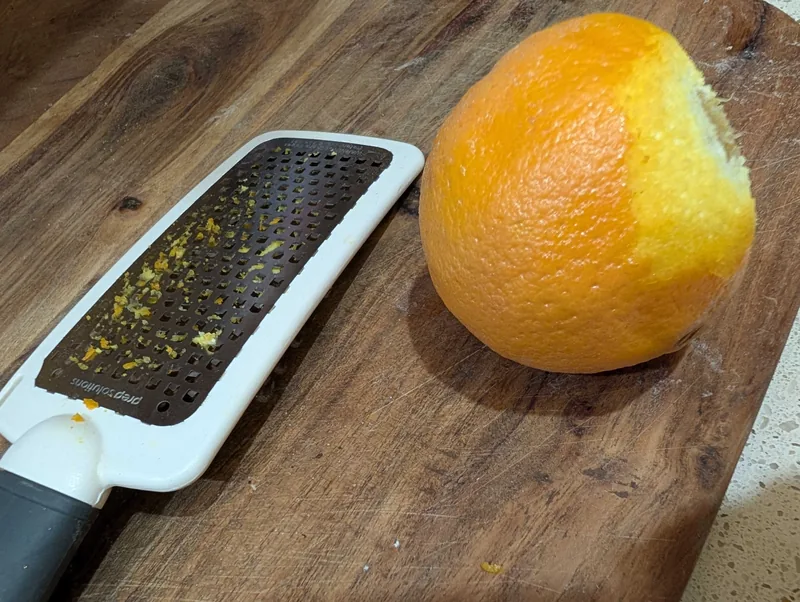
Bulk rise
Put the dough in a lightly greased bowl, cover and let it rise at about 74 to 78°F for 1½ to 2 hours, until it has grown by roughly half to three quarters and feels lighter. Give it three sets of stretch-and-folds, 30 minutes apart: stretch one side up and fold it to the center, rotating the bowl as you go.
Go by how the dough looks and feels, not just the clock.
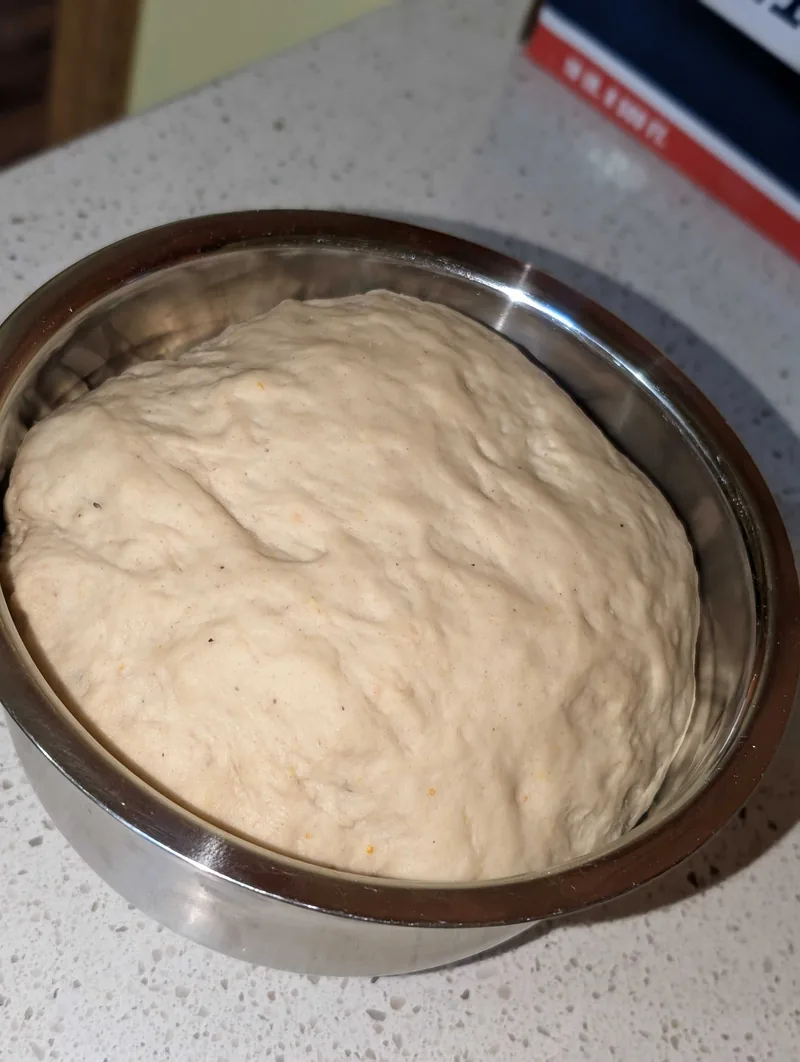
Shape and proof
Turn the dough onto a lightly floured surface and shape it into a tight round boule, building tension across the top without pressing out all the gas. Set it seam-side up in a well-floured proofing basket or a bowl lined with a floured towel. Cover and proof for 45 to 75 minutes, until slightly puffy and a fingertip dent springs back slowly.
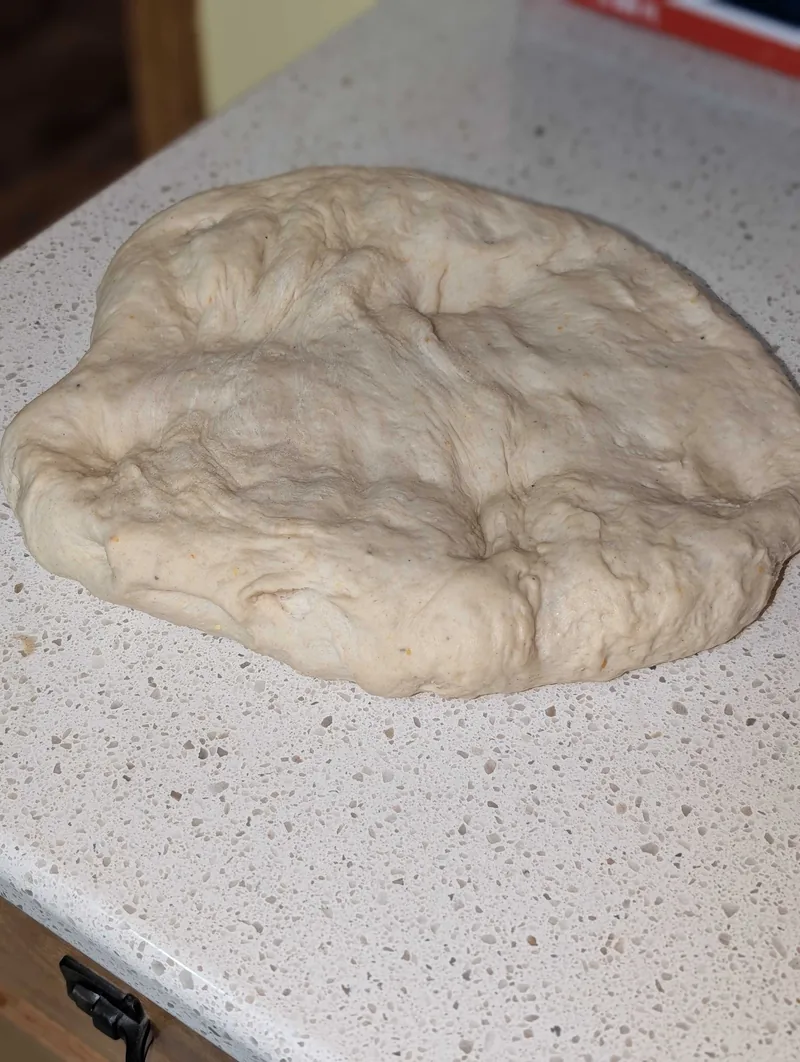
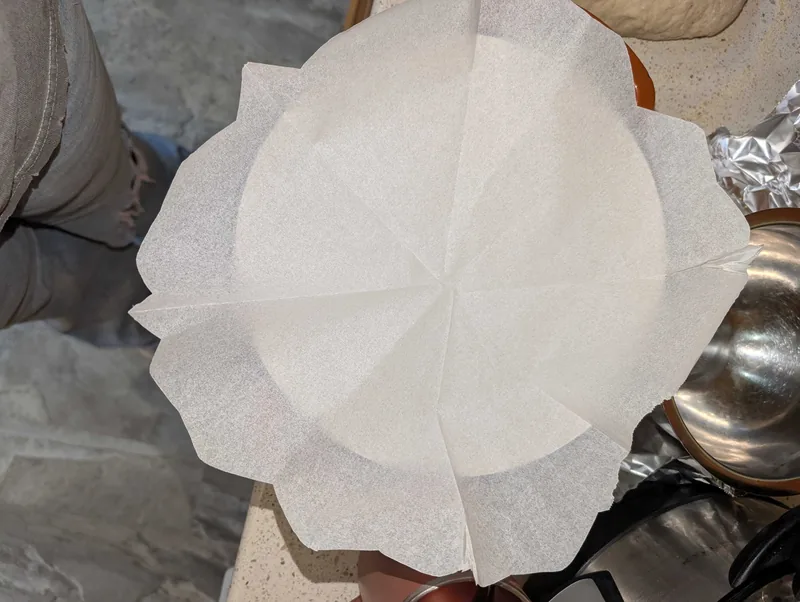
Cut a parchment round
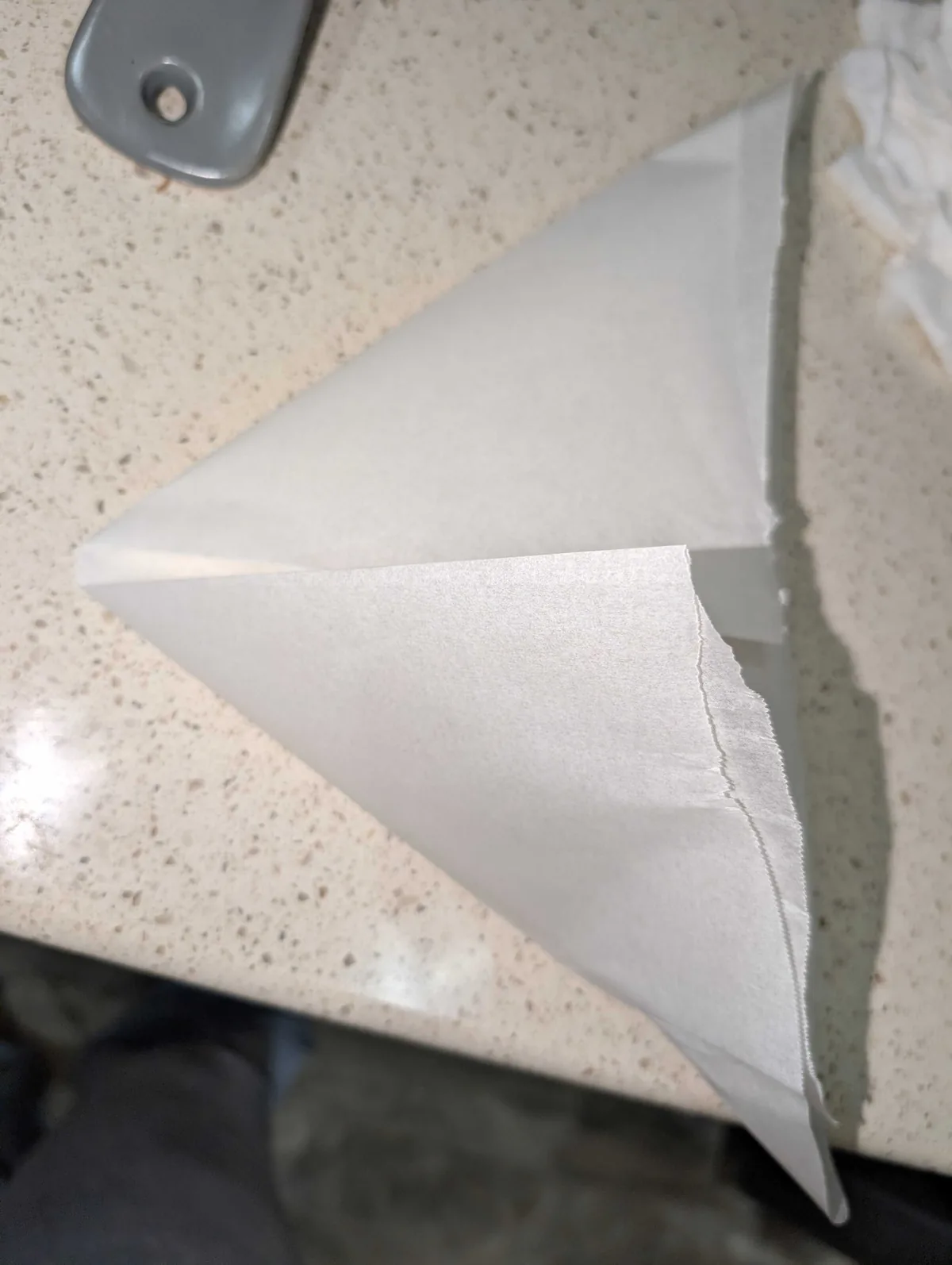
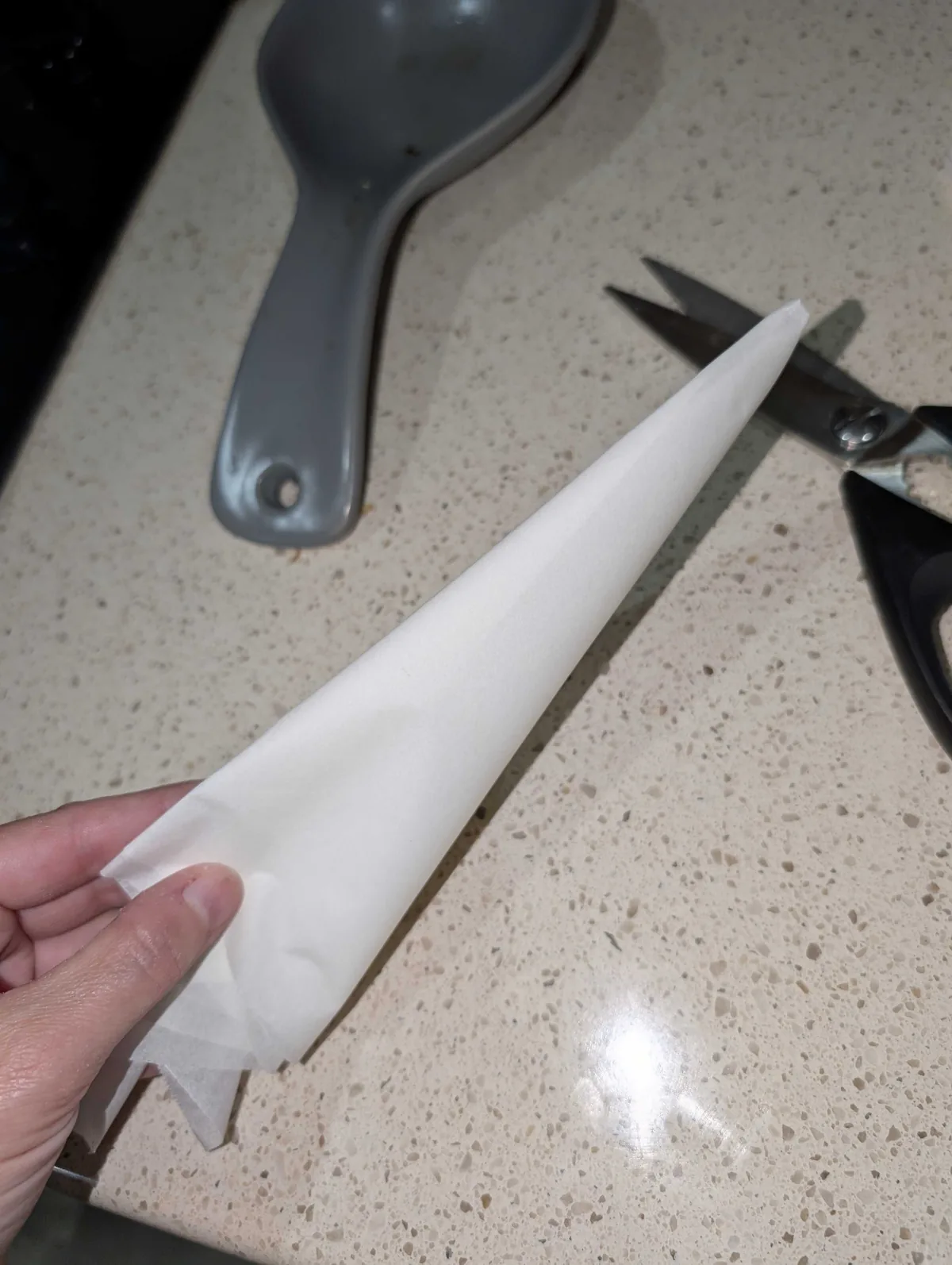
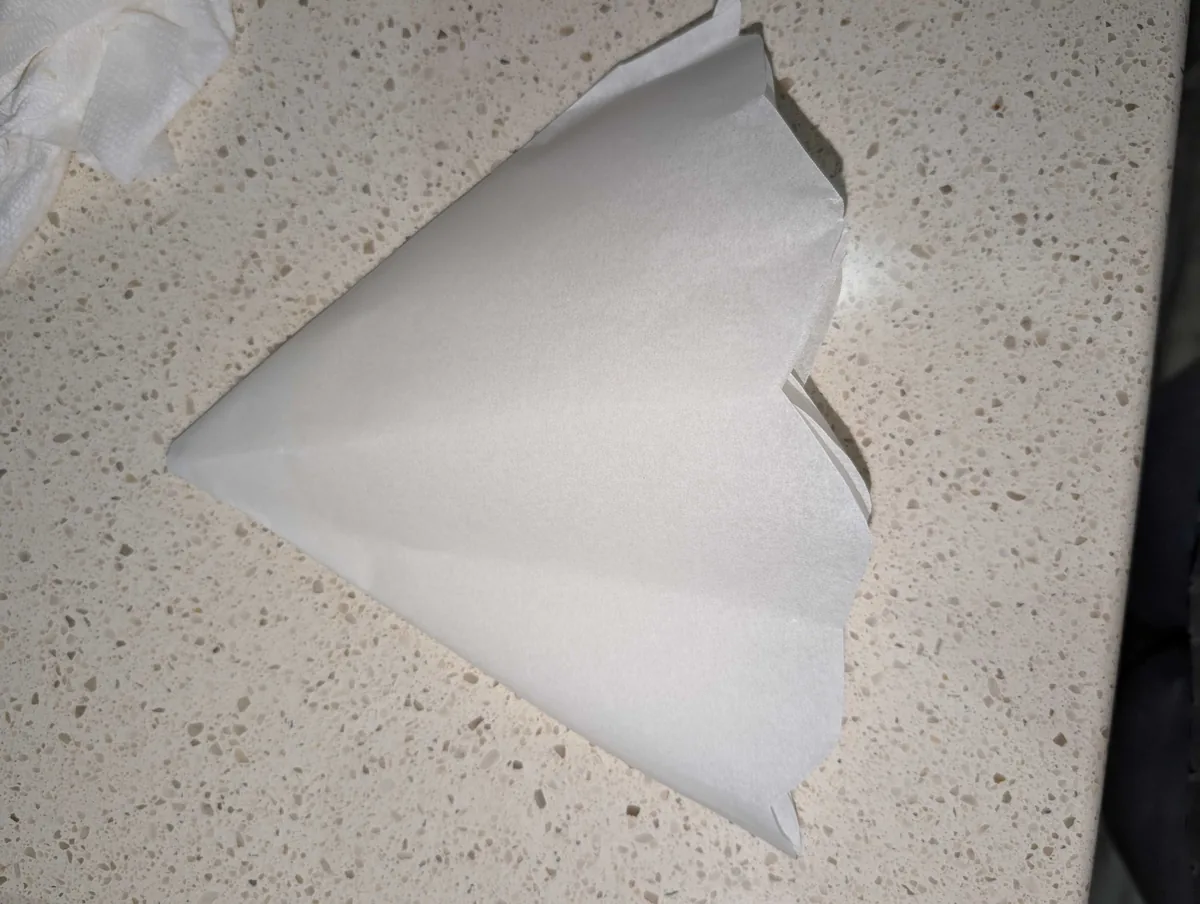
Fold a square of parchment in half, then in half again, then into a triangle and down into a narrow wedge, the way you would cut a French cartouche. Hold the point over the center of your Dutch oven, trim the wide end into a curve at the edge, and unfold it. It just needs to fit inside the pot without much paper sticking up.
Keep the paper below the rim and away from any exposed heating element, and check your parchment’s maximum temperature.
Heat the oven and score
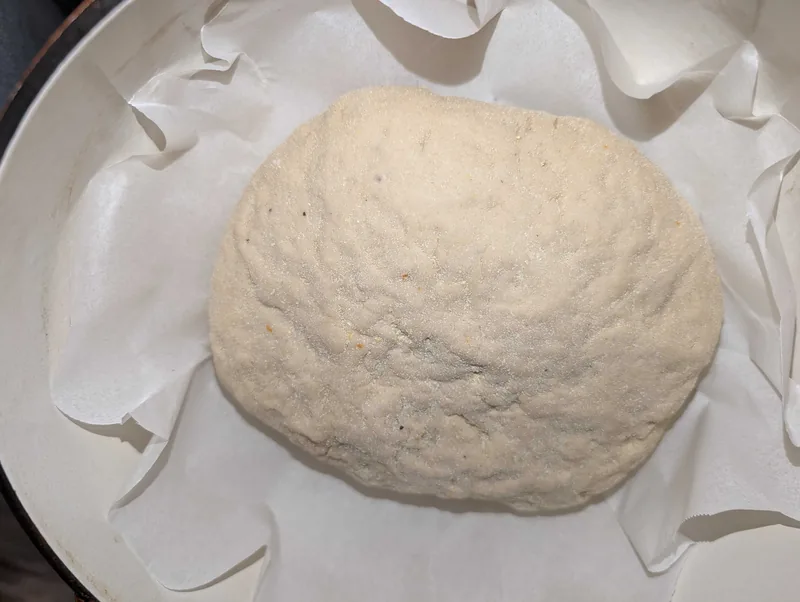
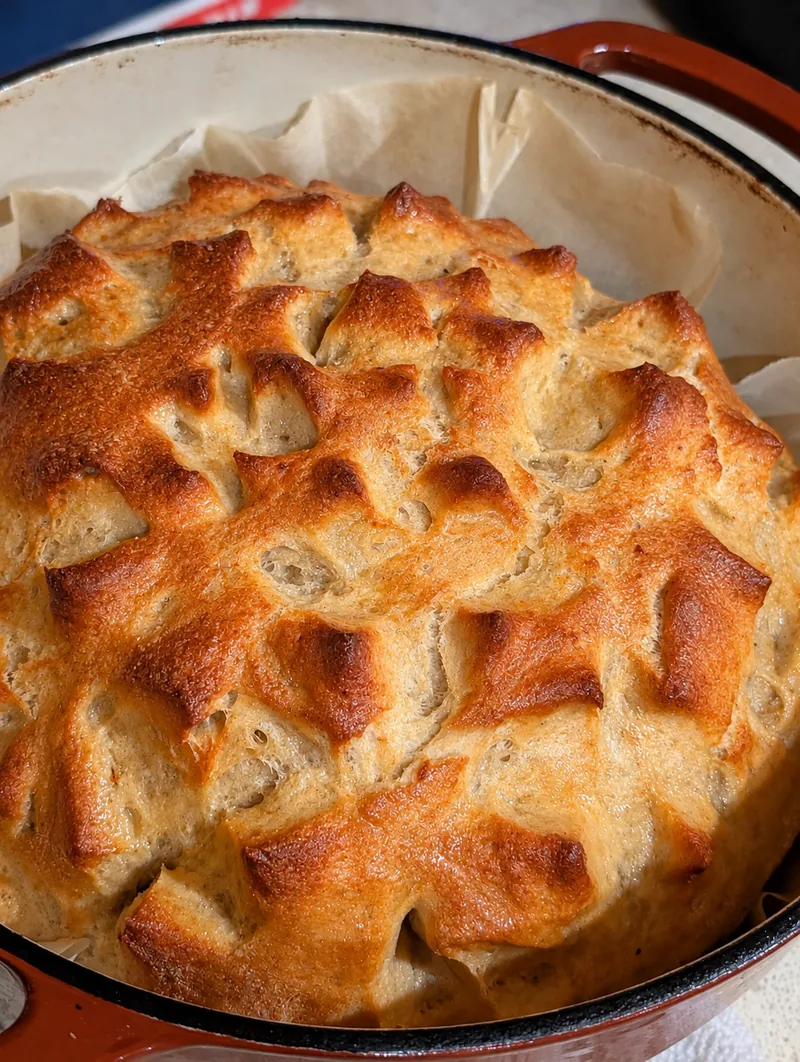
Put the lidded Dutch oven in the oven and heat it to 475°F for at least 40 to 45 minutes. Turn the proofed dough onto the parchment round, scatter a thin, even layer of cornmeal beneath it, and score the top with a crisscross of short, shallow cuts all over, so it bakes into rows of little golden peaks.
My kid does the scoring at our house. It’s the only part of bread making she’ll do, and she loves it. Score yours however you like. Fun is encouraged.
Bake covered
Lower the loaf and parchment into the hot Dutch oven, cover and bake at 475°F for 25 minutes. The trapped steam lets the loaf spring before the crust sets.
Butter and finish uncovered
Take off the lid and brush the top with a very thin film of the browned butter you set aside. Rewarm it for a few seconds if it has set. Lower the oven to 440°F and bake uncovered for 20 to 25 minutes more, until the crust is deep golden to mahogany and the inside reads about 205 to 210°F.
Just enough butter for sheen and aroma. Do not soak the crust.
Cool completely
Move the loaf to a wire rack and let it cool uncovered for at least 60 to 90 minutes before slicing, so the crust stays crisp and the crumb sets.
My parchment-cutting photos are not exactly a masterclass in precision. Let’s just say my cartouche would probably make a French chef reach for the scissors. Fortunately, the bread doesn’t care if the circle is a little wonky. We’re making artisan bread, not auditioning for Le Meilleur Ouvrier de France.
Ingredients · 5 hr · Serves 1 large boule
Browned butter
Bread dough
Autumn aromatics
For the crust
Best paired with
New this seasonDinner · 2 hr 10 min · 4 to 6
This loaf’s firm crumb was built for creamy broth. Serve thick slices with a pot of browned butter chicken and dumplings, and keep the stew savory and herby so the bread’s autumn flavors still come through.
Sweetened with raw honey and baked in a screaming-hot skillet of lard for a crisp, golden crust.
35 min · Easy

Sharp cheddar and two kinds of jalapeño in a buttermilk cornbread, baked in a screaming-hot buttered skillet. Made to go with the Buckeye Woodsman deer chili.
42 min · Easy
I send a new recipe most weeks, plus whatever went sideways in the kitchen that week.